The Origin Story: Why Justin Knowles Founded Facture Product Development
The High Cost of the Hardware Handoff
In the complex, high-stakes world of physical product development—especially for sophisticated consumer electronics or highly complex mechanical systems—the journey from a breakthrough conceptual idea to the successful, high-volume shipment of an end product is fraught with risk. The engineering process is capital-intensive, the margin for error is minimal, and the cost of late-stage corrections is often devastating.
Justin Knowles, the founder of Facture Product Development, didn’t start the company to simply design products; he started it to fix a fundamental, industry-wide problem: the fragmented, low-accountability “handoff” model that plagues hardware development.
Before Facture, Justin spent years observing and participating in the hardware lifecycle from various vantage points. He saw a recurring pattern of failure, especially with B2B engineering decision-makers and technology leaders who had high expectations for reliability and precision.
Here is the central challenge Justin identified:
Design Agencies focus on Industrial Design (ID) and aesthetics, often creating beautiful, high-fidelity renders that are simply not manufacturable at scale or cost. They design for the presentation, not the factory floor.
Engineering Firms focus on function, creating robust technical designs that often lack the user experience polish or cohesive vision required for market success. They prioritize performance over market viability.
Contract Manufacturers (CMs) focus purely on cost and output, cutting corners on material or process to hit a price target, and are often the first to blame a faulty design when a product fails in the field.
The process became a linear, one-way relay race where accountability was lost with every handoff—from ID to Mechanical Engineering (ME) to Electrical Engineering (EE) and finally to the manufacturer. This “handoff culture” led to systemic failures, including:
Late-Stage Cost Surprises: Finding out a critical mechanism designed by an engineering firm was too complex to mold during the tooling phase, forcing a costly and time-consuming redesign.
Product Fragility: A design that passed initial lab tests but failed spectacularly in real-world environmental conditions because no single team owned the end-to-end design validation.
Endless Schedule Slips: Time-to-market (T-T-M) being inflated by months as multiple partners blamed each other for flaws in the Bill of Materials (BOM) or tolerance stack-ups.
Justin realized that what B2B leaders truly needed wasn’t a collection of best-in-class individual disciplines, but a single, integrated partner who owned the entire outcome, from the napkin sketch to the first 10,000 units shipped. This vision of total ownership became the cornerstone of Facture Product Development.
A New Framework: Ownership from Concept to Commercialization
Justin founded Facture with the mission to replace the fragile “handoff” with a structured, rigorous, and completely integrated Five-Phase Product Development Framework. This is not a mere process; it is a philosophy built on the principle that the team that defines the product should be the team that validates it for mass production.
This framework is built upon the following five phases, ensuring continuity and shared accountability across the entire project lifecycle:
Phase | Core Goal | Facture’s Differentiating Value |
|---|---|---|
Phase 1: Discover | Validate viability and define specifications (PoC and PRD). | Total Technical De-Risking: Rigorous investigation into core technology and physics before major design investment. |
Phase 2: Develop | Translate concept into robust, manufacturable engineering design. | Integrated Disciplines: ID, ME, and EE/FW work in parallel to prevent aesthetic concepts that are impossible to engineer. |
Phase 3: Integrate | Merge all systems into a cohesive, functional prototype (Beta Unit). | Cross-Disciplinary Synthesis: Meticulous focus on communication protocols and seamless interaction between mechanical, electrical, and firmware subsystems. |
Phase 4: Refine | Optimize design for manufacturing (DFM/DFA) and long-term reliability (DVT). | Production Readiness Guarantee: The single most important activity—optimizing for cost and assembly yield before tooling, preventing factory-floor failures. |
Phase 5: Realize | Scale production and ensure successful market launch. | Oversight and Process Validation: Managing tooling, First Article Inspection (FAI), and Process Validation Testing (PVT) to ensure quality scales with volume. |
Why Seattle? The “Hands-On” Engineering Advantage
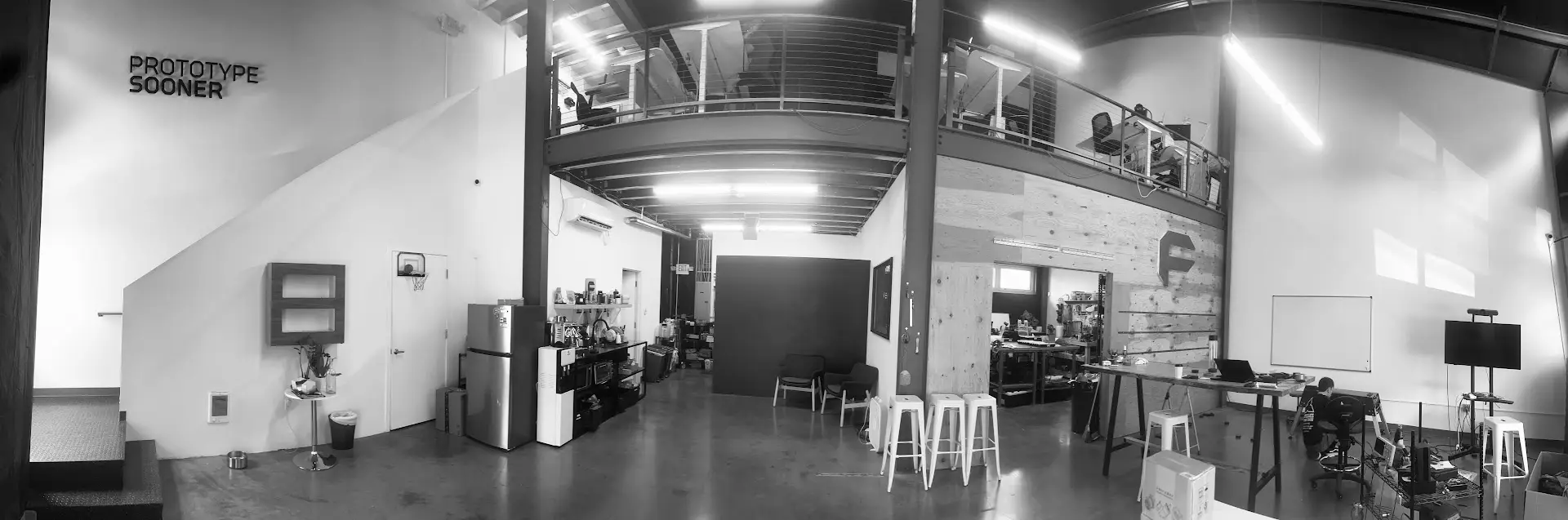
Another crucial element of Facture’s origin story is its location and philosophy: the Seattle-based, hands-on approach. Justin deliberately built Facture’s team to specialize in complex, mission-critical mechanisms.
Justin’s vision was to create a team where every engineer was not just a CAD jockey, but a builder—a practitioner who understood the tactile reality of material science, stress analysis, and long-term reliability. For products with intricate moving parts, Facture’s specialty, simulation and theory are necessary but insufficient. You need to touch, break, and rebuild the hardware.
This hands-on culture means Facture’s engineers are physically integrated with their projects. They are in the prototyping lab, running thermal tests, stress-analyzing complex mechanisms, and ensuring that every component specified in a CAD model will survive years of use in the field. This local, integrated approach—as opposed to a purely remote management style—is what allows Facture to ensure that precision engineering and flawless execution are absolute, non-negotiable requirements for every client project.
The Facture Commitment
Justin Knowles founded Facture because he believed B2B engineering leaders deserve a partner whose success is wholly tied to the commercial success and technical reliability of their product, not just the completion of an individual design phase.
Facture is more than an engineering partner; it is an accountable, end-to-end development authority. By implementing a system of continuous validation and cross-disciplinary ownership, Facture minimizes technical and financial risk, ensuring that ambitious projects move with maximum efficiency and minimal course correction from the initial concept all the way through to final, high-volume realization.
This is why Facture exists: to transform the volatile, high-risk process of hardware development into a structured, repeatable, and successful framework.